
 ,
,

 ,
,
 ,
,

Context: This article was originally written in response to Executive Order 14036, in which President Biden encouraged the FTC to act against unfair and anticompetitive restrictions on third-party repair and self-repair. Since then, the subject developed through FTC enforcement, warranty practices, DMCA repair exemptions and the Deere case around agricultural equipment. President Trump revoked Executive Order 14036 on August 13, 2025, but that revocation did not end the FTC’s statutory authority. In 2026, the FTC reached a settlement with Deere intended to give farmers and independent repair providers access to important repair resources. The text remains relevant as historical and social context for Right to Repair, ownership, manufacturer control, software locks and independent repair.
 Follow our fight for Right to Repair
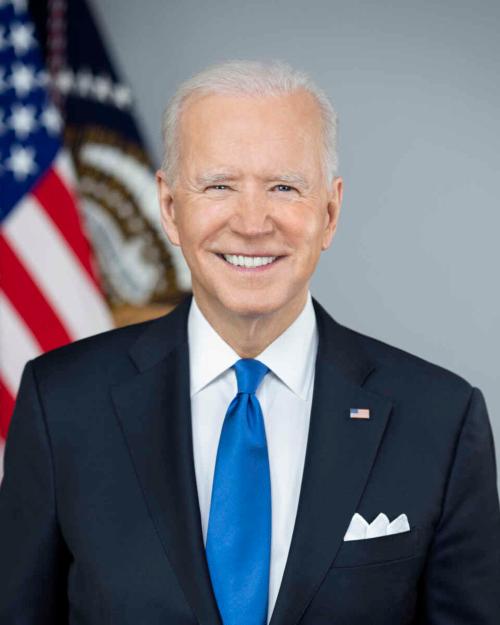 U.S. President Joe Biden has issued an executive order on right to repair. In the order, the president asks the FTC to look into drafting rules. The president acknowledges the trend of manufacturers in many industries becoming more and more anti repair. The President recognizes this as a problem for both the economy and the environment.
We're very pleased with this recognition and the indirect support the President of the United States of America has given us and other companies involved in independent repair. Our struggle is far from over as manufacturers continue their anti repair practices and political lobbying. The FTC has already written an almost devastating report towards anti repair arguments and practices. Their report clearly proves that: neither independent repair causes security and privacy issues, neither does it negatively influence technological progress. Instead the FTC recognizes that independent repair plays a vital role in many industries.
We're also very happy the President not only addresses independent repair, but also addresses the need for individuals to be able to repair devices themselves. Individuals should have the right and ability to open up, investigate, repair and tinker their own devices. This is how a large portion of skilled technicians started out. Many technologies we have today would not have been possible without these individuals. Everybody here at ASK-Solutions started out tinkering with devices in their youth. It inspired us and brought us the skills we have today. Steve Wozniak, one of the founders of Apple, puts it very well in his recent video about right to repair.
The 2021 executive order was not a repair law by itself. It was mainly a policy direction: the president identified repair restrictions as part of a broader competition problem and encouraged the FTC to use its existing authority. That made the subject more visible at federal level, but the practical consequences still had to come through enforcement, policy statements, lawsuits, exemptions and concrete rules.
The FTC responded shortly afterwards with a policy statement announcing stronger enforcement against illegal repair restrictions. In 2022, this was followed by final FTC orders against Harley-Davidson, MWE Investments and Weber, after warranty terms could wrongly discourage consumers from using independent repairers or third-party parts. That made clear that Right to Repair is not only about parts and tools, but also about misleading or restrictive warranty practices.
A second follow-up line ran through software locks and the Digital Millennium Copyright Act. In 2024, the FTC and the Department of Justice filed a joint comment with the U.S. Copyright Office supporting the renewal and expansion of repair-related exemptions. Their core point was that technological protection measures can protect copyrighted works, but can also block legitimate diagnosis, maintenance and repair.
Later in 2024, a new DMCA exemption followed for diagnosis, maintenance and repair of retail-level commercial food preparation equipment. At first sight that may look like a narrow category, but the principle is broader: software and digital locks should not automatically be used to exclude owners, businesses or independent repair providers from equipment they lawfully use.
In 2025, the political context changed. President Trump revoked Executive Order 14036. That formally ended the broad competition order from the Biden administration. At the same time, the revocation order itself stated that it did not impair the legal authority of agencies. That distinction matters: an executive order can give political direction, but the FTC ultimately bases enforcement on existing laws such as the FTC Act, antitrust law and consumer protection rules.
The follow-up under the new administration was therefore mixed. The Trump administration moved away from the Biden framing around broad competition regulation, but the FTC did not abandon the Right-to-Repair track entirely. The most visible test became the case against Deere & Company.
In January 2025, the FTC sued Deere, alleging that farmers and independent repair providers were restricted in their ability to repair agricultural equipment. The core issue was not a simple screw or physical part, but access to software, diagnostic functions and repair resources needed to maintain modern machines in practice.
In July 2026, a settlement followed. For ten years, under supervision by the FTC and the plaintiff states, Deere must provide farmers and independent repair providers with repair resources equivalent to those available to authorized dealers. This includes reading and clearing fault codes, reprogramming and pairing electronic components, restarting machines after certain emissions-related shutdowns, and access to technical manuals, troubleshooting information and other diagnostic guidance.
This makes the historical meaning of the executive order clearer. The order itself did not create a direct right to repair, and it was later revoked. But it did mark a moment when repair restrictions were identified at federal level as a competition problem. The years that followed show that Right to Repair in the United States does not move forward through one route only, but through a combination of FTC enforcement, warranty practices, copyright exemptions, state legislation and concrete cases against manufacturers.
Copyright © 2026, ASK-Solutions


